Ask most players why they’ve plateaued and you’ll get some version of:
- “I need to work harder”
- “My technique isn’t there yet”
- “I just need more reps”
That sounds logical.
It’s also the reason they stay stuck.
Most players don’t plateau because of effort. And they don’t plateau because their forehand needs another 5,000 balls.
They plateau because they’re not actually training the skill that decides matches:
Decision-making.
The Practice Looks Good. That’s the Problem.
Watch a typical session.
Balls are being fed. The player is moving well. Contact is clean. Rhythm is there.
If you walked by, you’d think: this is solid training.
But look closer.
- The ball is predictable
- The situation is predictable
- The decision is often made in advance (or doesn’t exist at all)
The player isn’t solving anything.
They’re executing in a controlled environment.
That can look good for a long time without actually improving performance.
Matches Are a Different Game
Then they go play a match.
Now:
- The ball isn’t predictable
- The opponent is changing things constantly
- Time disappears
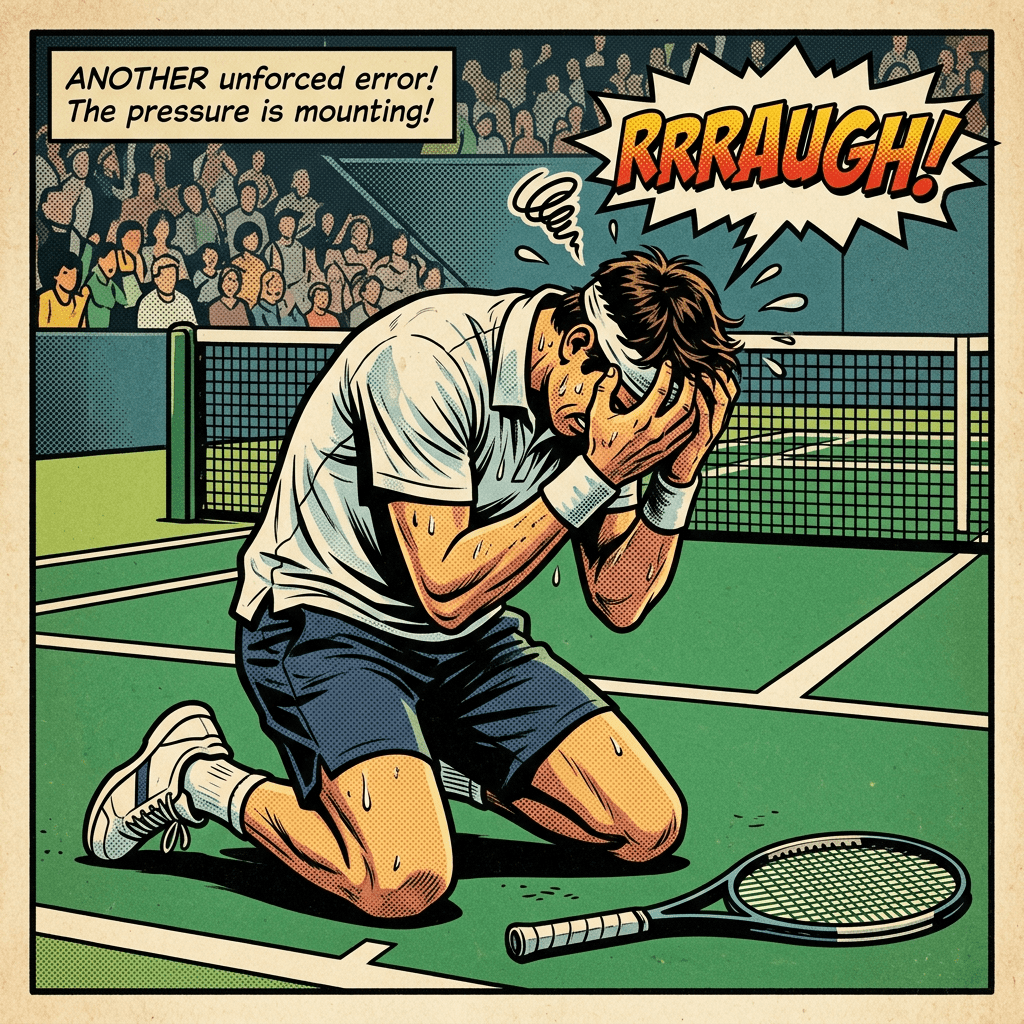
- Pressure shows up
And suddenly the same player looks “inconsistent.”
But most of what we call inconsistency isn’t technical.
It’s decision quality breaking down under pressure.
Wrong target. Wrong timing. Wrong pattern.
That shows up as missed shots—but the miss isn’t the root problem.
More Reps Just Dig the Hole Deeper
The default fix is always the same:
“I just need more reps.”
So players go back and hit more balls in the same environment that caused the problem.
Now they’re just getting better at executing without making decisions.
That doesn’t transfer.
You can hit a clean forehand all day in practice and still choose the wrong shot 20 times in a match.
At some point, it’s not about how well you can hit.
It’s about whether you’re choosing the right thing to hit.
The Skill That Actually Separates Players
At higher levels, it’s rarely about who has better strokes.
It’s about who:
- Recognizes situations faster
- Chooses higher-percentage options
- Adjusts patterns based on what’s happening
That’s not technique.
That’s awareness + decision-making.
And most players barely train it.
What Needs to Change
If your practice doesn’t force decisions, it’s limited.
That doesn’t mean feeding is useless. It just means it’s incomplete.
At some point, the player has to:
- Read something
- Decide something
- Live with the outcome
That’s where improvement actually happens.
Simple examples:
- Don’t just rally—add constraints on when you can change direction
- Don’t start every drill neutral—start in disadvantage or attack situations
- Don’t measure reps—pay attention to decisions
Now you’re training something that exists in matches.
Plateaus Aren’t Random
If you’ve been at the same level for a while, it’s not bad luck.
It’s your training environment doing exactly what it’s designed to do.
It’s building a certain level of player—and then stopping.
More volume won’t fix that.
Better design will.
A Better Question
Instead of asking:
“How do I hit this better?”
Ask:
“What’s the right decision here—and can I recognize it fast enough?”
That’s a different level of problem.
And it’s the one that actually moves players forward.
Final Thought
Most players aren’t that far off.
They just spend too much time in practice that doesn’t look like the game.
Tennis isn’t just execution. It’s problem-solving under pressure.
If you don’t train that, you shouldn’t expect it to show up when it matters.

 Michal's Musings
Exceptional work here Michal. Any player would benefit for incorporating these concepts into their practice. Well said.
LikeLike