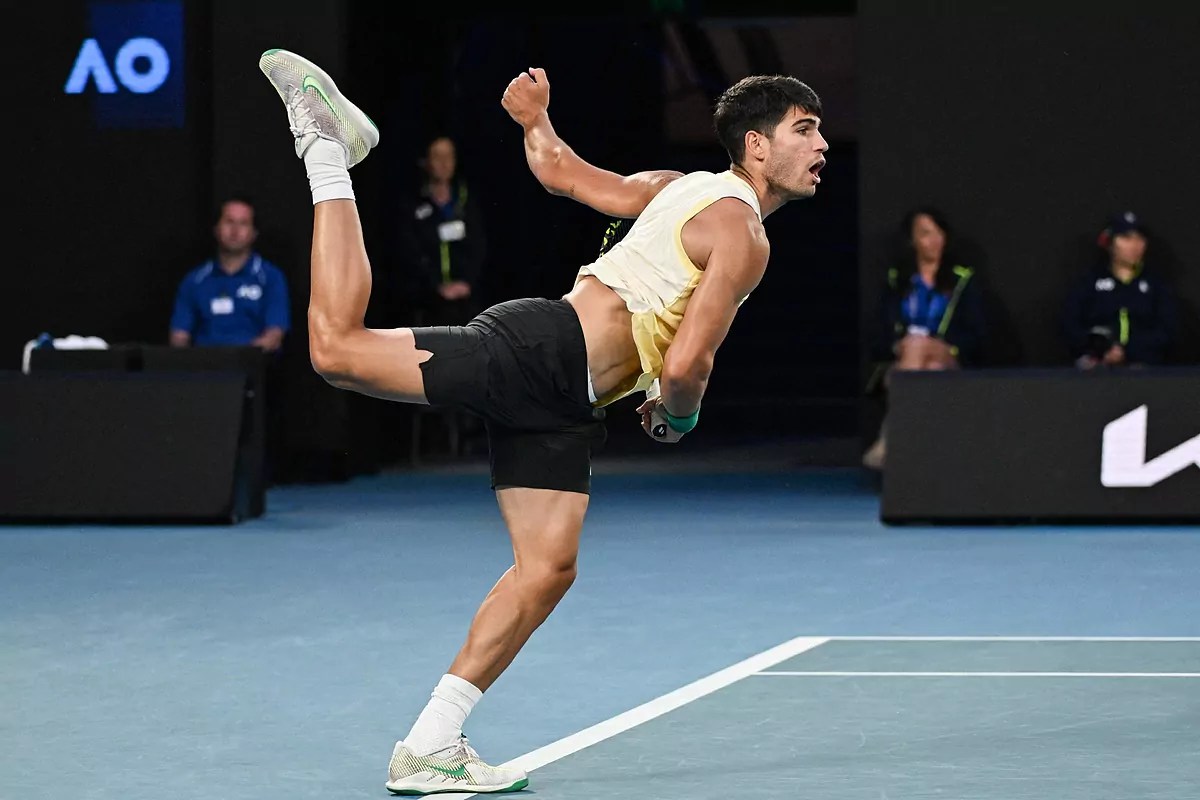
One of the things that makes watching Carlos Alcaraz play tennis so exciting is the variety in his game. When his feet are set for a forehand, he is equally adept at blasting a 100mph missile, or use his touch and send a soft drop shot barely over the net. He can slice, come to the net, lob, defend exceptionally well..there are not many holes to exploit in his game. However, during his 2025 Australian Open quarter final defeat at the hands of Novak Djokovic, he was too predictable on one particular shot. And in a match decided by a few points, that proved too costly.
Here are the serving statistics from their match; Djokovic on the left hand side, Alcaraz on the right.
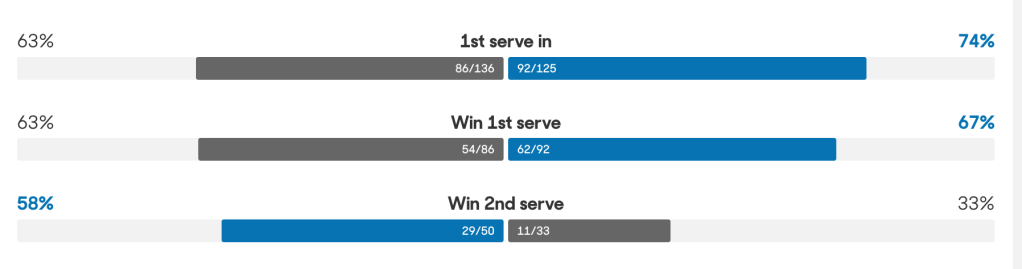
Alcaraz had the upper hand when the first serve was put in play, winning 67% of those points compared to 63% for Djokovic. But Alcaraz couldn’t get anything going behind his second serve, winning only 33% of the points, well below the 58% of Djokovic. Djokovic is one of the best returners in the history of our sport, but Alcaraz’ predictable second serve placement helped him out last night.
Here is where Novak Djokovic aimed his second serves against Alcaraz:
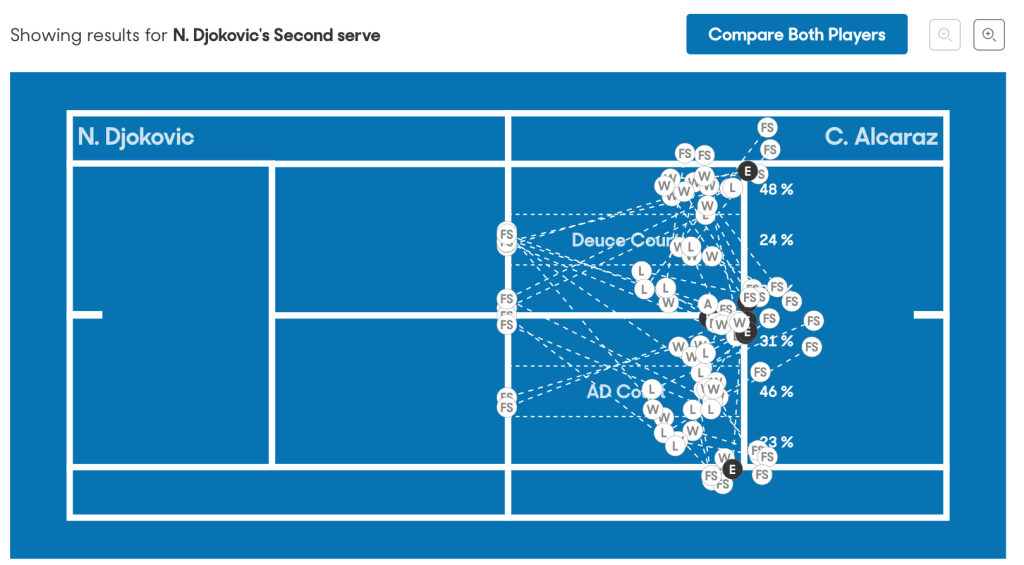
In the deuce side, Djokovic served wide on 48% of his second serves, 24% into the body, and 28% into the Alcaraz backhand. In the ad side, the breakdown was 31%/46%/23%. The lowest overall percentage is 23% – out wide in the ad side. That is still almost one out of every four second serves in the ad side, and forces the returner to cover the whole box.
By contrast, here is the second serve placement map for Alcaraz:
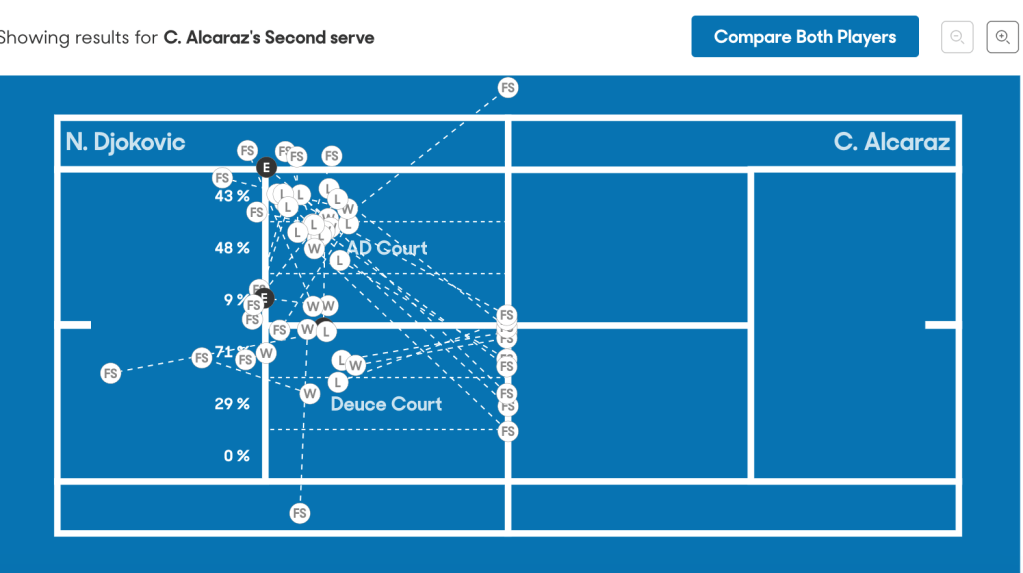
In the deuce court, Djokovic could have eliminated the wide third of the box completely when getting ready to receive Alcaraz’ second serve. In the ad side, only 9% of Alcaraz’ second serves went down the T, into the Djokovic forehand.
By completely avoiding the Djokovic forehand return, Alcaraz gives Djokovic an invitation to set up the point however he likes. Djokovic can either step in, and take his backhand return early – made easier by the fact that he can wait in his backhand grip and give up a third of the box. Or, he can back up to get a forehand return anyway – here he can start moving early, while Alcaraz’ ball toss is still in the air, because he knows that the serve will be aimed toward a particular area of the box.
Alcaraz has made some changes to his serve technique before the Australian Open already. He is one of the most electric players on tour, and the scary thought is that, at such a young age, he still has room to improve. Mixing up his second serve placement, making it more unpredictable, would complement the rest of his game, and help even out the second serve battleground in his next encounter with Novak Djokovic.

 Michal's Musings
2 Comments